Preview quotes of our upcoming publication : EQUUS PERUANO™,
by Señor Don Alfonso Figuerola-Saavedra.
Zaña..., river, valley and, today, the remnant town of its former Villa de Santiago de Miraflores. Located between the Reque and Jequetepeque rivers and coastal valleys. (...) Only acquired its noble name in 1563 by mandate and provision of the General Captain and 4th Viceroy of the Kingdoms of Peru, Don Diego López de Zúñiga y Velasco, 4th Count of Nieva. (...)Its opulent and brief colonial life would only last 157 calendar years gone by in a fugacious amalgam of peculiar circumstances that singularly contributed to remember it forever. Always agricultural and sowed early with imported fields of wheat for the consumption of the colony, and also of native cotton, which would soon turn into the most lucrative plantations of Prime Sugar to dispute their soil with aromatic tobacco fields and thus supply the most sophisticated of South American Creoles; but above all, renown for the fame and fineness of its Creole Jacas rigorously caparisoned in celestial luxuries for being the preferred mounts of the wealthy lambayecano Commissioners who through marriage became related with the Noble and neighboring Hidalgos of Trujillo to form an exclusive and tight society of opulent aristocrats who amassed immense fortunes to the benefit of their Peruvian descendants for almost twenty family generations.
Citas como avance de nuestra próxima publicación : EQUUS PERUANO™,
por el Señor Don Alfonso Figuerola-Saavedra.
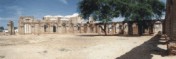
Convent of San Agustin.
Convento de San Agustín.
Zaña..., río, valle y, hoy, el pueblo remanente de su otrora Villa de Santiago de Miraflores. Situada entre los ríos y valles costeros Reque y Jequetepeque. (...) Recién adquirió su nombre castizo en 1563 por mandato y provisión del Capitán General y IV Virrey de los Reinos de El Perú, Don Diego López de Zúñiga y Velasco, IV Conde de Nieva. (...) Su opulenta y corta vida colonial sólo duraría 157 años calendarios sucedidos en fugaz amalgama de peculiares circunstancias que singularmente contribuyeron a recordarla sin olvido. Siempre agrícola y sembrada temprano en trigales importados para el uso colonial, y también de algodón nativo, que pronto se convertirían en los más lucrativos cañaverales de Azúcar Flor para disputar su suelo con aromáticos tabacales y así suplir a los más sofisticados Criollos suramericanos; pero sobre todo, reconocida por la fama y finura de sus Jacas Criollas reciamente enjaezadas en lujos celestiales por ser las Monturas preferidas de los riquísimos Encomenderos lambayecanos que pronto emparentaron con los hijos de los Nobles y vecinos Hidalgos trujillanos para formar una exclusiva sociedad cerrada de opulentos aristócratas quienes amasaron grandisímas fortunas para beneplácito de sus descendientes peruanos por las casi veinte generaciones familiares venideras.
(...) Su otrora bonanza se manifiesta en la magnificencia de sus imponentes catorce Templos y respectivos Conventos derruidos y milagrosamente algunos todavía en pié como San Agustín fundada en 1584, y su Matriz en 1630, así como también La Merced, y San Francisco; testigos silenciosos de la catastrófica inundación ocurrida el 15 de marzo de 1720, y otra similar acaecida en 1728 que la destruyó por completo. Ambas consecuencia del fenómeno de El Niño.
(...) De sus gentes sólo quedan algunos nombres que vagamente aún recuerdan sus ancianos cuyas ancestrales anécdotas orgullosamente narradas, coinciden meticulosamente con los los registros virreinales de antaño que verifican su fe histórica; y así mencionan, omitiendo fechas.
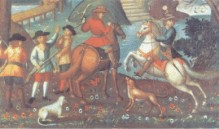
...La aristocrática presencia de mi antepasado, el rico hacendado De Palma y Vera, conduciendo palangana, y esclavo al pie, su Bestia altanera de cadencioso Andar, que amartilla el suelo con sus Pisos y Metal a su paso por doquier... Vestida va su Montura con cabezada y riendas de trenza filigrana tejida en cuero crudo de venado alzado, que embarrila artesana Plata Piña asortijada Su Silla es de Cajón, y no es mas que un Fuste desnudo y esculpido en Sauce Ahogado y retobado en cuero crudo de carnero con Mamacona por reatas, y recubierto cual “Chalaco” en sutil funda acolchada de algodón Motupano ricamente adornado con intrincados bordados tejidos con hilos de metal oro y sedas de la Gran China traídas via Acapulco desde la Filipina Manila y enconchado con sus Siete Pesos Plata de Ley Real, y Guarniciones de Florón repujado con Caídas cortas y sin Retranca; y estribado en Corazón de Zapote, acampanado y cantonado con Plata Labrada….
(...) Its bonanza of long past times is made manifest in the magnificence of its fourteen imposing Temples and their Convents destroyed and some miraculously still standing to this day like San Agustin founded in 1584, and its Principal in 1630,
as well as La Merced, and San Francisco; silent witnesses to the catastrophic flood of March the fifteenth, 1720, and a similar one occurred in 1728 which completely destroyed it. Both by cause of the El Niño phenomenon.
(...) From its very own first settlers only remain but some names who vaguely still recall those before them whose ancestral anecdotes proudly narrated, they accurately match with all and plenty of the Spanish colonial entered data in the registries of yore, and that confirm its historic faith; and thus mention, without giving dates.
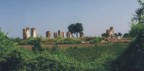
Ruins of Zaña.
Ruinas de Zaña.
...The aristocratic presence of my ancestor, the wealthy landowner De Palma y Vera, proudly riding “palangana”, and slave at his side on foot, his loose front-end gaited Beasts, who hammer the ground with their Pisos and Metal wherever they pass through... Their Mounts go dressed in headstall and reins braided out of wild deer rawhide, wrapping in tightly collar rings of artisan Raw Silver Its Saddle is a Box Saddle and is not more than a Saddle Tree unadorned and carved out of Willow, and covered in raw sheepskin with Mamacona for tying; and covered as “Chalaco” in subtle blanket woven out of Motupanoque cotton goes richly adorned with intricate embroidery with threads of gold metal and silk from the Great China brought from Manila. (Inlaid with its Seven Silver Pesos of Royal Fineness, and trappings of repousséd rosettes, with short Caídas without Broad Crupper; and stirruped in Heart of Sapota, bell-shaped and bordered with Engraved Silver).