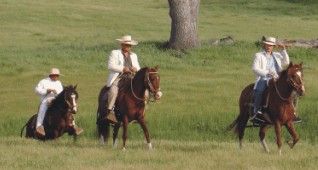
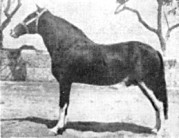
La Yeguada Figuerola, portadora del Hierro de Ganado AFA, establecida por Don Antonio Alfonso Figuerola-Arana, en Chepén y Pacanguilla, tuvo una interesante historia cronológica durante su medio siglo de existencia propia. (1909-1968).
(…) Las muy primeras fueron las Monturas chachapoyanas de Celendín criadas durante varias generaciones por sus abuelos y ascendientes, los De Arana y Del Risco, quienes las utilizaban para trasladarse hacia y desde la costa (Pacasmayo), a través de la infinidad de desolados senderos cajamarquinos, cruzando la cordillera andina que alojaba sus rústicos equinos Parameros. Durante el largo trayecto demostraban su gran capacidad física y su desplazamiento de pisar suave, firme, y cadencioso, propio de los Andares Finos.
(…) sus mantos Zainos, Castaños, Negros, Tordillos, así como también algún Negro Pío de procedencia vagamente perdida en la historia, por el hecho de ser los viajeros “Andadores”, propios de Nobles y Virreyes coloniales, entre los dos centros mas importantes de la Cría Caballar establecida durante la Conquista española del Perú, tanto en el valle costero del Río Zaña, vía el Jequetepeque, así como en la oriental Luya del territorio de los indígenas Chachapoyas del norteño Trujillo del Perú…
El origen de la Yeguada Saavedra fundada por Don Antonio Saavedra (AS) , mi bisabuelo materno, en su Hacienda Chafan Chico fue descrita a mi curiosidad y textualmente por Don Alejandro Saavedra (CAS), mi abuelo materno, al manifestarme en su Hacienda La Calera:
“Sólo ser receptor y continuador de la Cría de la misma Yeguada “Cordobesa” perteneciente a nuestras múltiples Haciendas establecidas en nuestro Valle del Jequetepeque a partir de 1740, (....) La misma que fue criada aisladamente en origen por sus anteriores terratenientes los Frailes Augustinos durante el siglo y medio posterior a la Conquista española, de cuyos Conquistadores ya Encomenderos las recibieron en donación, y fue complementada por nuestros antepasados al refinarla con sus Bestias Finas traídas desde Piura, Lambayeque, y Zaña así como desde la Ciudad de los Reyes, Lima”.
The Figuerola Stud, holder of the AFA Cattle Brand, established by Don Antonio Alfonso Figuerola-Arana, in Chepén and Pacanguilla, had an interesting chronological history during its own half century of existence. (1909-1968). (…) The very first were his Chachapoyano Mounts from Celendín raised for several generations by his granparents and ascendentes, the De Arana and Del Risco, who used them for travelling to and from the coast (Pacasmayo), over an infinity of isolated Cajamarquino trails, crossing the Andean range that sheltered its rustic Parameros (high plateau) equines. During the long trajectory they demonstrated their great physical capacity and their smooth, firm and rhythmical displacement of gait, proper to the Fine Paces (…) their Brown, Bay, Black and Grayish colors, and an occasional Black Piebald of origin vaguely lost in time, due to the fact of being the travelling “Pacers”, proper to colonial Nobles and Viceroys, between the leading centers of Equine Breeding established during the Spanish Conquest of Peru, both in the coast valley of the Zaña River, via the Jequetepeque, as in the eastern Luya of the territory of the Chachapoya natives of Peru's northern Trujillo del Peru...
The origin of the Saavedra Stud farm founded by Don Antonio Saavedra (AS), my great-grandfather on the maternal side, at his Hacienda Chafan Chico was described for my curiosity and textually by Don Alejandro Saavedra (CAS), my grandfather on the maternal side, on revealing to me at his Hacienda La Calera:
“Only to be recipient and continuer of the Offspring of the “Cordobesa” Stud belonging to our multiple Haciendas established in our Valley of the Jequetepeque since 1740, (....) The same which was reared isolately in origin by its former landowners the Augustinian Friars during the one-and-a-half-century subsequent to the Spanish Conquest, of which Conquistadors already Commissioners received them in donation, and was supplemented by our predecessors when refining it with their Fine Beasts brought in from Piura, Lambayeque,and Zaña as well as from the City of the Kings, Lima”.